
How to choose CBD oil: Use and dosage step by step
- What is CBD oil?
- How is CBD oil produced?
- How to choose CBD oil?
- CBD oil use: how to do it?
- CBD oil dosage: how to find the ideal dose?
- Conclusion: CBD oil for everyday well-being
- FAQ
What is CBD oil?
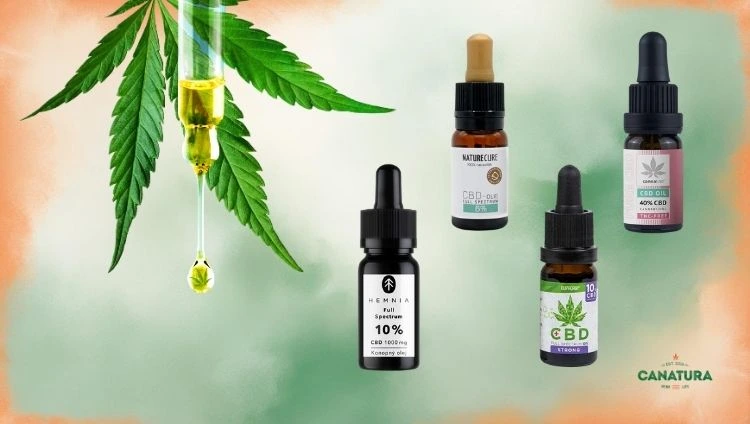
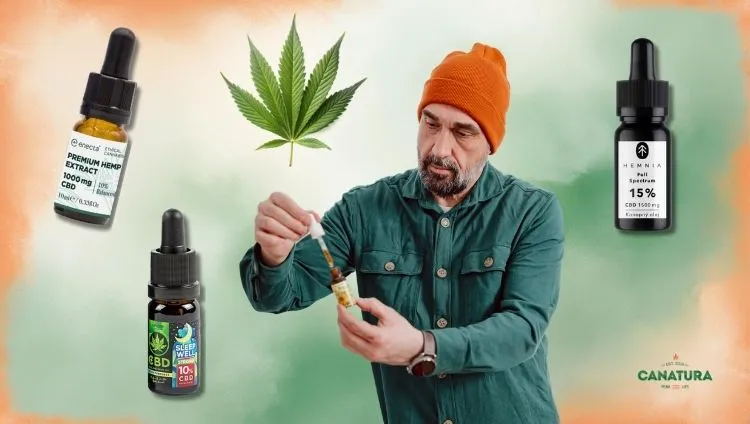
CBD oil (also known as CBD drops) is an extract obtained from hemp, which is mixed with a carrier oil. It mainly contains cannabidiol (CBD) and, depending on the type of oil, other substances (such as terpenes, flavonoids or other cannabinoids).
CBD oil is sold in a bottle with a dropper, so it can be easily and accurately dosed drop by drop. Unlike THC, CBD does not cause intoxication.
A number of studies have focused on the potential therapeutic benefits of CBD and examined the effects of CBD oil, particularly in relation to stress, inflammation, pain and sleep.
Some CBD oils are specifically tailored to particular problems – for example, there are special CBD drops for sleep, but also for relaxation, memory and concentration, and pain relief.
Experiences with CBD oils may vary from person to person – it always depends on the dose, concentration, sensitivity and method of use. If you are dealing with health issues or taking medication, we always recommend consulting your doctor.
How is CBD oil produced?
CBD oil is obtained from the flowers, leaves and stems of cannabis by extracting the active ingredients. The following methods are most commonly used for production:
- CO₂ (carbon dioxide) extraction – this method uses high-pressure carbon dioxide to extract CBD from the plant. At certain combinations of temperature and pressure, CO₂ acts as a solvent. In practice, you may encounter supercritical, subcritical or medium-critical CO₂ extraction. The most commonly used method is supercritical, in which CO₂ is brought to a so-called supercritical state under precisely controlled temperature and pressure – that is, to a phase where it has the properties of both a gas and a liquid. When done correctly, the resulting product is very pure.
- Ethyl alcohol extraction – one of the technically simpler methods of cannabis extraction. Ethyl alcohol is food-grade alcohol used to extract cannabinoids, terpenes and other substances from the plant. The ethyl alcohol is then evaporated and the extract is further distilled to remove unwanted components.
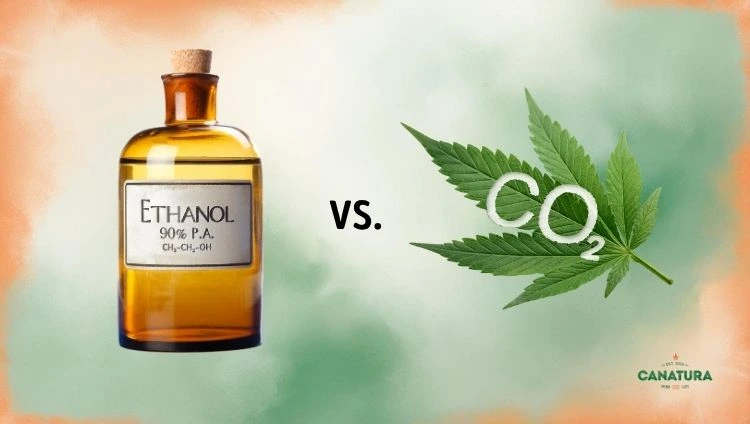
In both cases, the cannabis is processed in such a way as to “extract” mainly fat-soluble substances – i.e. cannabinoids, terpenes and other natural components.
The result is a full-spectrum extract that contains a whole range of cannabinoids and terpenes and can be further processed – either into CBD isolate (pure CBD) or with the THC removed to create a broad-spectrum extract. We describe the types of CBD oils in more detail below .
Tip: Cannabis substances can also be obtained in other ways. We discuss these in more detail in the article Guide to the most commonly used methods of extracting compounds from cannabis.
How to choose CBD oil?
CBD oils differ in composition, concentration and type of carrier oil. When choosing, pay attention to several factors:
1. Type of CBD oil
Each type of CBD oil has its advantages – it mainly depends on what you expect from CBD and what your preferences are. We distinguish between:
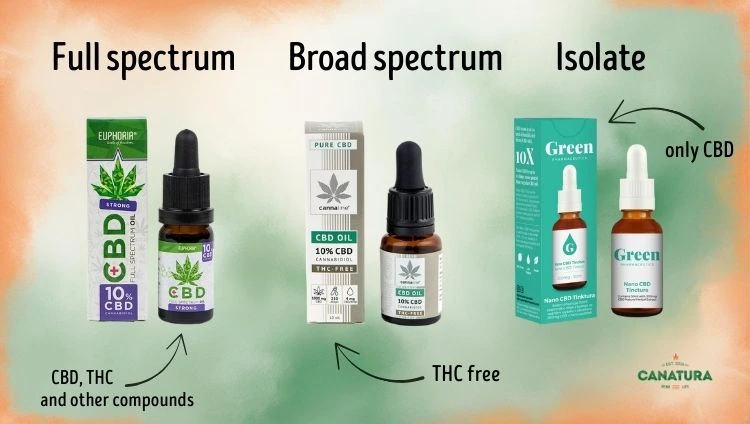
- full spectrum CBD oil – contains CBD and other cannabinoids, including THC within the legal limit (up to 0.2%), terpenes and other substances.
- broad spectrum CBD oil – contains CBD, other cannabinoids, terpenes and other substances, but does not contain THC.
- CBD oil isolate – the purest form of CBD without other cannabinoids and terpenes.
Full spectrum and broad spectrum oils often mention the so-called entourage effect, which occurs when cannabinoids, terpenes and other substances from cannabis work together – their effects complement and enhance each other. With CBD isolate, which contains only CBD, you will not experience this effect.
Tip: For more information on the types of CBD oils, see the article Types of CBD Oils – Full Spectrum, Broad Spectrum & CBD Isolate.
2. CBD oil concentration
You will find CBD oils of various concentrations (5% to 40%) on the market. The concentration tells you how “strong” the oil is – that is, how much CBD it contains and, therefore, approximately how much CBD you will receive in one drop.
However, this does not mean that a higher concentration is automatically better. It is advisable to choose a CBD oil strength that suits your preferences. For example, beginners should start with a lower concentration, monitor their body’s response and gradually increase it if necessary.
In general, the following can be said about CBD oil concentrations:
- lower concentrations (5 and 10%) are suitable for beginners, completely inexperienced users and regular CBD users,
- medium concentrations (10 and 15%) are a more universal choice for regular CBD users,
- higher concentrations (20, 25, 30, 40%) are recommended for more experienced users.
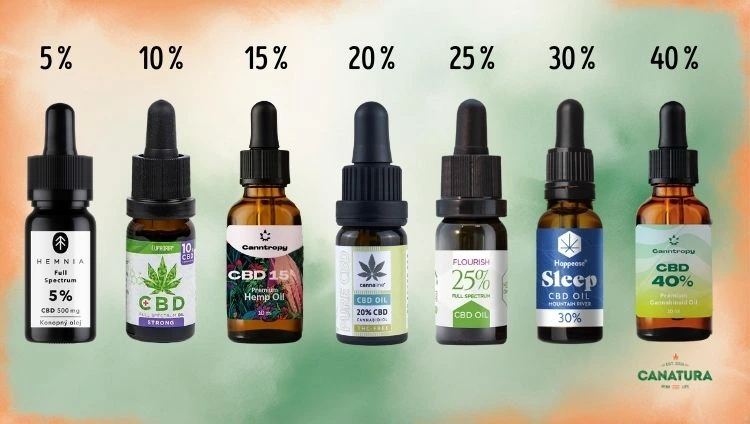
When purchasing CBD oils, pay attention not only to the percentage but also to the total amount of CBD in the entire bottle (in mg) – this will make it easier for you to compare products and understand the dosage. For example:
- A 10 ml bottle of 5% oil usually contains 500 mg of CBD – one drop therefore typically contains 2–2.5 mg of CBD.
- A 10 ml bottle of 10% oil usually contains 1,000 mg of CBD – one drop therefore contains approximately 5 mg of CBD.
- The same applies to other concentrations.
However, it always depends on how many drops the bottle actually contains, which is why it is advisable to always follow the manufacturer’s instructions.
Tip: We know how important concentration is and why the strength of CBD oil matters so much.
3. CBD carrier oil
CBD oil always contains CBD dissolved in a carrier oil, which helps dissolve the substances from hemp and promotes better absorption.
In addition, it also makes it easier to use, as it affects the final taste of CBD oil, which is otherwise naturally earthy, grassy and nutty.
Several different types of carrier oils are used to dissolve CBD:
- coconut,
- MCT,
- olive,
- palm,
- avocado,
- hemp,
- sesame,
- grape seed.
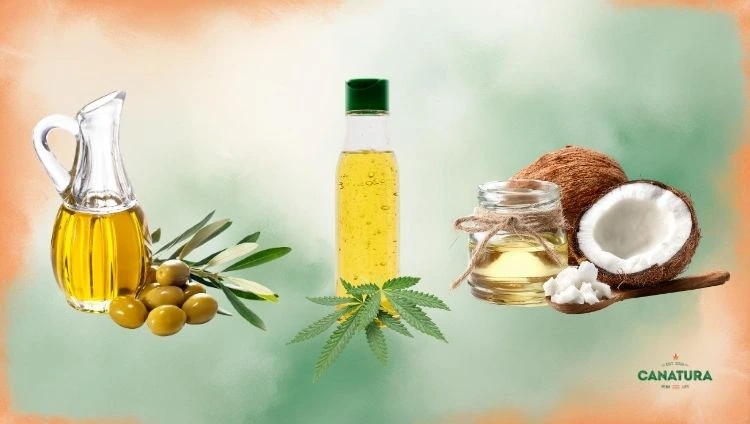
Which carrier oil is best? There is no clear answer to this question. However, any carrier oil used should be good enough to dissolve and absorb CBD well.
CBD oil use: how to do it?
CBD oil can be used in several ways. These differ mainly in the speed of onset of effects and also in how comfortable you find using the oil.
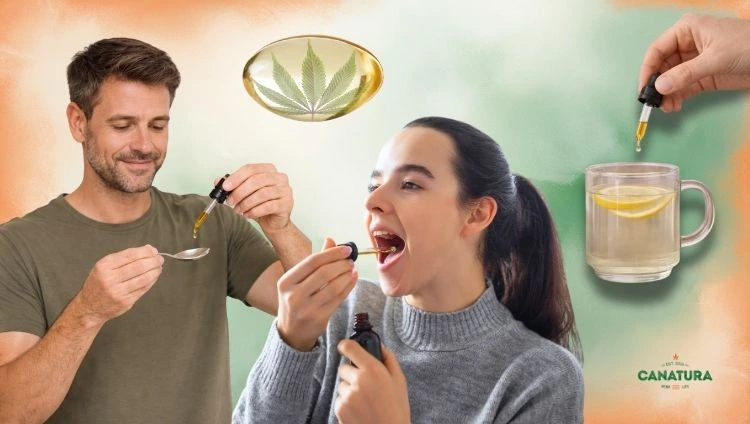
- Under the tongue (sublingually) – Drip CBD oil under your tongue, let it sit for a moment, and then swallow. This method is suitable for rapid absorption through the mucous membrane.
- Normal swallowing (orally) – Drip CBD oil onto a spoon or directly into your mouth and swallow. Absorption is slower than with sublingual use.
- Mixing into food or drinks – Add CBD oil to yoghurt, porridge, salad or other dishes, or drip it into tea, juice, smoothies or coffee. Absorption is slower.
- Add to cosmetic products – Add CBD oil to cream, for example, suitable for topical use.
When to use CBD oil?
In the morning, afternoon or evening? With food or on an empty stomach? There is no universal rule. It is best to adjust your use to how your body reacts to CBD and what results you want to achieve.
Some people incorporate CBD oil into their morning routine to start the day, while others take it in the evening to calm their mind and promote sleep.
If you are dealing with specific problems (such as pain or anxiety), it may make sense to time your CBD oil intake for when these problems usually occur – or take the oil as needed.
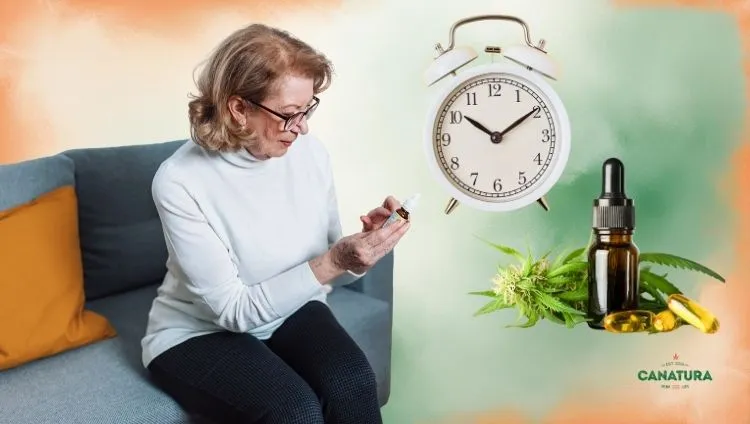
Taking CBD oil with certain foods can increase its bioavailability – that is, the amount of CBD that is actually absorbed and enters the bloodstream after use.
Tip: You can find out more about the ideal time to take CBD oil in the article When is the ideal time to take CBD? Morning or evening?
How often should CBD oil be taken?
CBD oil can be used long-term, but also on a one-off basis as needed. It mainly depends on why you are using CBD and how your body reacts to it.
In order to determine whether the chosen concentration is sufficiently effective, it is often recommended to take CBD oil daily for at least one to two weeks. The intake of CBD oil can then be slowly increased if necessary.
You can divide your total daily intake (number of drops) into several daily doses (two to three). Some people also report that after several months of long-term use, they take a short break (for example, a few days).
CBD oil dosage: how to find the ideal dose?
Finding the ideal dosage of CBD oil takes time. There is no one-size-fits-all advice – it always depends on body weight, age, sensitivity and previous experience with CBD, but also on the concentration (strength) of the oil itself.
If you are new to CBD, it is best to start with a smaller dose, observe how CBD affects you, and then gradually adjust the dose as needed.
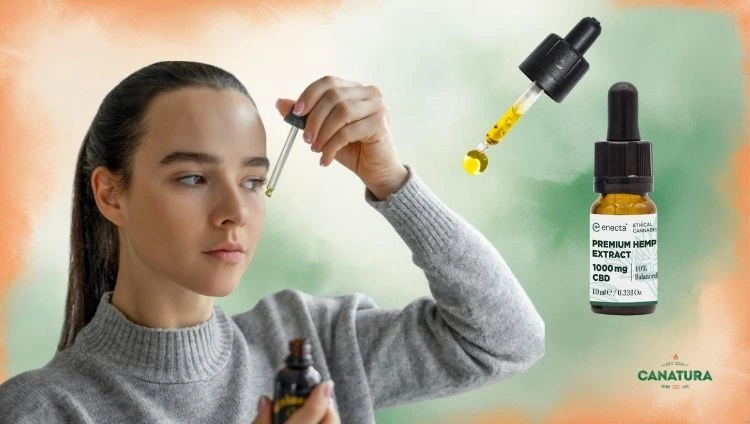
How many drops of CBD oil should you take?
Without personal experience with CBD, it is very difficult to find the ideal dose – that is why there are general recommendations and simple calculations that can help you set a reasonable dosage to start with, which can of course be adjusted over time.
1. Find out the strength of the CBD oil
First, you need to find out how much CBD there is in 1 ml of oil. Sometimes the manufacturer states this value directly, but often you will only find the total amount of CBD in the entire bottle (e.g. 500 mg, 1,000 mg, 2,000 mg) and the volume of the bottle (e.g. 10 ml, 30 ml) on the label.
You can easily calculate the strength of CBD oil yourself:
- [total CBD in mg] / [bottle volume in ml] = [CBD in mg/ml]
Example: If a bottle of 5% CBD oil contains 500 mg of CBD, then there is 50 mg of CBD per 1 ml (500 / 10 = 50 mg/ml).
2. Measure the volume of the dropper
To ensure the most accurate dosage, it is worth checking how many drops from your dropper correspond to 1 ml. The procedure is simple: fill the dropper, let the CBD oil drip out gradually and count the drops. For most pipettes, this usually works out to 20 drops.
Then you can easily calculate how much CBD is contained in one drop:
- From the first step, we know how many mg of CBD there are per 1 ml of oil.
- In the second step, we found out how many drops there are in 1 ml of oil.
- Finally, we calculate how many mg of CBD are in one drop: (mg of CBD per 1 ml) / (number of drops in 1 ml)
Example: 5% CBD oil (10 ml bottle) contains 500 mg of CBD → 500 / 10 = 50 mg/ml. Using a dropper, we found that 1 ml is 20 drops → 50 / 20 = 2.5 mg of CBD per drop.
3. Calculate the approximate dose according to your weight
First, choose whether you want a lower, medium or higher strength CBD oil. The following is often given as a guideline:
- lower strength: 1 mg per 4.5 kg
- medium strength: 3 mg per 4.5 kg
- higher strength: 6 mg per 4.5 kg
You can then calculate your dose using this formula: (your weight in kg / 4.5) × selected strength (in mg) = daily dose in mg.
Example: weight 72 kg, lower strength → 72 / 4.5 ≈ 16 → 16 × 1 mg = 16 mg CBD per day.
So if 5% CBD oil (10 ml bottle) contains 2.5 mg of CBD in one drop, then your ideal dose is approximately 6 drops (16 / 2.5 ≈ 6 drops).
4. Adjust the dose according to how CBD affects you
Every organism reacts to CBD a little differently, so it pays to follow not only the calculation but also your own feelings. Even two people with the same weight and similar lifestyles may react differently to the same dose.
Start with the dose calculated in the previous steps and stick to it for a few days. If it is not enough for you, you can carefully increase the dose (for example, by switching to a higher strength).
Example: In our example with a person weighing 72 kg, the lower strength came out to 16 mg per day – when converted to medium strength (3 mg per 4.5 kg), it would be approximately: 16 × 3 mg = 48 mg of CBD per day.
CBD oil manufacturers often list the maximum daily dose for their product. For Hemnia Full Spectrum 20% CBD oil, 2,000 mg, 10 ml, for example, the maximum is 60 mg.
Tip: For more important information on using CBD oil, see our CBD oil dosage guide for beginners.
Conclusion: CBD oil for everyday well-being
CBD oil can be a practical aid for everyday well-being – whether you use it for relaxation, better sleep or regeneration. When choosing, it is important to consider the type of extract, concentration and your own preferences and experience.
Proper use and dosage are equally important: it is better to start with a lower dose, monitor how CBD affects you, and gradually increase the dose if necessary. If you are taking medication or dealing with health issues, it is advisable to consult your doctor before using CBD.
FAQ
1. What is CBD oil good for?
People most often seek CBD oil to improve their mental well-being, relieve pain or sleep better. They often reach for it during stressful periods, after physical exertion or in the evening when they want to relax.
According to various scientific studies, CBD oil can have positive effects on the human body – from relieving chronic pain and anxiety, improving sleep and relieving inflammation, to helping with certain skin problems and supporting neurodegenerative diseases. CBD oil can also help pets.
2. Which CBD oil is best?
There is no clear answer to this question. The best CBD oil is the one that suits your preferences and whose quality has been verified. Above all, make sure that:
- the CBD oil has been tested by an independent laboratory (COA)
- the CBD content in mg is stated on the label
- it is the type of extract (full spectrum, broad spectrum or isolate) that you prefer
- it contains a high-quality carrier oil (MCT, hemp, etc.)
3. Who should not use CBD oil?
Without consulting a doctor, CBD oil is generally not recommended for pregnant and breastfeeding women, children, or people taking medication. Giving CBD oil to pets should also be discussed with a specialist.
4. Why are the drops placed under the tongue?
When you place CBD drops under your tongue (i.e. sublingually), the CBD is absorbed through the mucous membrane, so the effect often occurs more quickly than when swallowed or mixed into food or drink.
5. How long should CBD oil be used?
It depends on the reason for use, your preferences and any recommendations from a specialist. Some people use CBD oil only occasionally as needed, while others incorporate it into their routine on a regular basis.
If you want to assess whether CBD oil is right for you, it is a good idea to monitor your body’s response for a few weeks and adjust the dose or concentration accordingly.
It may also help to clarify the result you want to achieve (e.g. better sleep, reduced stress, improved skin problems, etc.).
6. How to dose CBD oil?
The dosage of CBD oil is individual. For beginners, it is recommended to
- start with a lower concentration of CBD oil
- monitor how CBD oil affects you for some time
- increase the dose or concentration as needed
7. Where should CBD oil be stored?
Store CBD oil in its original dark glass container in a cool, dark place. Do not store it on a windowsill or in a car.
8. When do CBD drops start to work?
The speed at which the effects kick in varies depending on how you use CBD oil. When taken sublingually (dropped under the tongue), CBD is absorbed through the mucous membrane, so the effects often kick in faster than when swallowed normally or mixed into food or drink.
9. How long does CBD oil last?
Follow the minimum shelf life on the packaging (usually 12 to 24 months). To maintain quality, it is important to store CBD oil properly and consume it by the date recommended by the manufacturer after opening.
How can you tell if CBD oil has gone bad? Pay attention if the oil:
- has changed significantly in colour or consistency (it is dark and cloudy)
- smells or tastes musty
In this case, it is best not to use it and buy a new bottle.
10. How many milligrams are in one drop of CBD oil?
It depends on the total amount of CBD and the number of drops in the bottle. The manufacturer’s information (if provided) is always the most accurate – as a guide, however, for a 10 ml bottle it may look like this:
- 5% (500 mg CBD) → ~2.5 mg CBD/drop
- 10% (1,000 mg CBD) → ~5 mg CBD/drop
- 15% (1,500 mg CBD) → ~7.5 mg CBD/drop
- 20% (2,000 mg CBD) → ~10 mg CBD/drop
- 25% (2,500 mg CBD) → ~12.5 mg CBD/drop
- 30% (3,000 mg CBD) → ~15 mg CBD/drop
- 40% (4,000 mg CBD) → more than 15 mg CBD/drop
11. Does CBD oil contain THC?
Yes, but only in full-spectrum CBD oil, which contains not only CBD but also legally permitted amounts of THC, other cannabinoids and terpenes.
12. Can CBD oil show up in a drug test?
CBD (cannabidiol) is not psychoactive, so it does not affect perception in any amount, and the World Anti-Doping Agency (WADA) does not have it on its list of prohibited substances. There is therefore normally no reason to test for CBD oils in the blood.
If you do test positive for drugs, it is usually not because of CBD, but because of THC (or other cannabinoids). Products without THC or with THC content within the legal limit offer the greatest certainty.
13. What happens when alcohol is combined with CBD oil?
Combining alcohol and CBD is generally not recommended – both substances can have a relaxing effect, and when taken together, they can cause drowsiness and a drop in blood pressure, dizziness or fainting.
Sources:
- Valorisation of Wild-Type Cannabis indica by Supercritical CO2 Extraction and Insights into the Utilisation of Raffinate Biomass
- Isolation of Biologically Active Compounds from Cannabis sativa L. Inflorescences by Using Different Extraction Solvents and Evaluation of Antimicrobial Activity
Author: Lucie Schmidtová
Photo: AI
“All information provided on this website, as well as information provided through this website, is for educational purposes only. None of the information contained herein is intended to be a substitute for a medical diagnosis and should not be considered medical advice or recommended treatment. This website does not endorse, condones or advocate the licit or illicit use of narcotic drugs or psychotropic substances or the commission of any other illegal activity. For more information, please see our Disclaimer .”

