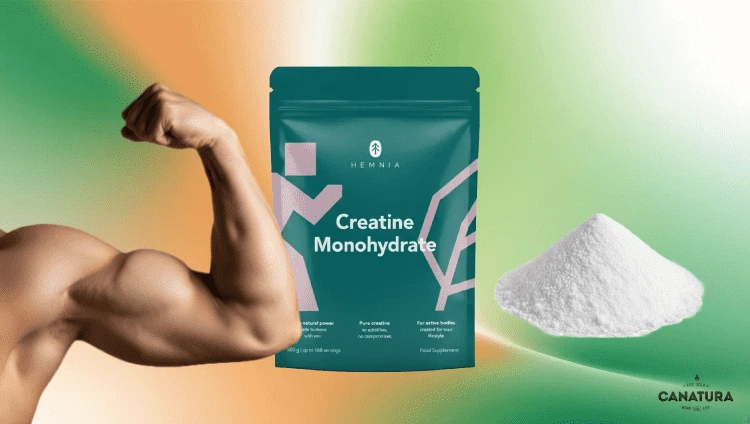
Everything you need to know about creatine
- What is creatine?
- What does creatine do?
- Benefits of supplementation
- Side effects
- Not all creatine is the same
- Dosage
- What to take away from this?
- FAQ
What is creatine?
Creatine is a natural substance in the body — it is produced by the synthesis of amino acids in the liver, kidneys and pancreas. It is then stored in the muscles in the form of phosphocreatine (PCr).
Creatine is found in raw meat, but only in small amounts — 100 g of raw beef provides only 0.5 to 1 g of creatine. Supplementing creatine through synthetic supplements is therefore the most effective and economical way to achieve levels that affect physical performance.
What does creatine do?
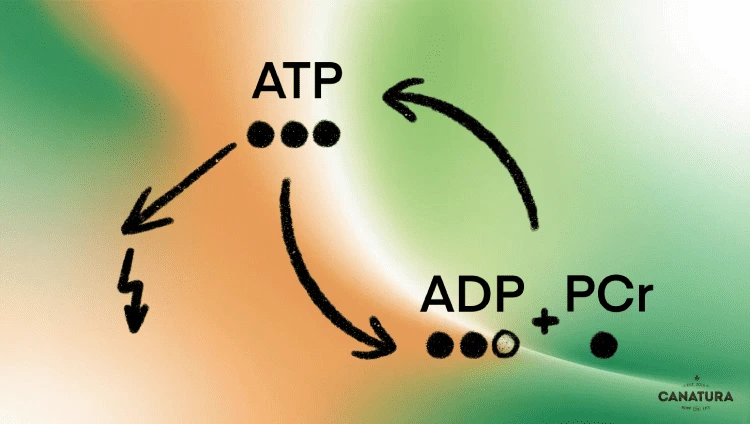
Creatine in the form of phosphocreatine (PCr) serves to rapidly restore the main energy molecule adenosine triphosphate (ATP).
ATP is the first source the body reaches for during short-term intense exercise, but it is quickly depleted. When energy is expended, one of the three phosphate groups is separated from ATP, converting it to adenosine diphosphate (ADP).
At that moment, PCr donates its phosphate group to ADP, turning ADP back into ATP, which can once again provide energy to the muscles.
When the body depletes its PCr reserves, slower energy sources come into play, resulting in fatigue, reduced performance and a burning sensation in the muscles.
This means that the more creatine, or phosphocreatine, you have, the better and longer you can handle demanding workouts.
Benefits of supplementation
What are the effects of creatine? The main motivation for taking creatine is to improve athletic performance. The effect of creatine use on training efficiency is supported by a number of studies.
For example, a 2003 analysis reports that athletes who took creatine during resistance training gained an average of 1.14 kg more muscle mass than those who trained without supplementation.
Another study from the same year, which evaluated the results of 22 studies, found that individuals who took creatine during exercise experienced an average increase in maximum strength of up to 8% and performance of up to 14% compared to those who did not take creatine.
In addition to its effect on athletic performance, creatine has other benefits. Because the brain also uses ATP, and therefore PCr, creatine supplementation may have a neuroprotective effect and positively influence cognitive function. Creatine supplementation may also support immunity and bone health.
Although there is a lot of research describing the benefits and risks of creatine use, we have little information about how it works in the female body. However, studies to date suggest that creatine could have a number of benefits for women, such as giving them more strength during pregnancy and minimising the negative effects of the menopause.

Side effects
Is creatine harmful? Because creatine is a substance produced naturally by the body, side effects are rare and mild.
What are the side effects of creatine? High doses may cause digestive problems, but otherwise supplements are considered safe, and there is no reason for a healthy person not to take creatine. Nevertheless, there are many myths about its side effects.
Does creatine cause hair loss?
No. This concern stems from a single small study from 2009. Twenty athletes were tested for three weeks and showed an increase in dihydrotestosterone (DHT) levels, which, when excessive in the male body, causes baldness. Although the level of this hormone increased by an average of 56%, it was still within the normal range for most of the test subjects.
New, specifically targeted studies have not confirmed that creatine increases DHT levels and leads to hair loss.
Does creatine cause weight gain?
Yes, but it is not fat gain. After starting supplementation, water retention usually occurs inside muscle cells, leading to a slight increase in body weight. This effect is positive because hydrated muscle is stronger and regenerates better.
Does creatine damage the kidneys?
Because individuals taking creatine have been found to have higher levels of creatinine, which is a typical symptom of reduced kidney function, concerns have been raised that creatine damages the kidneys.
However, the higher presence of creatinine in the body in the case of supplementation is caused by the breakdown of larger amounts of creatine into creatinine, not poor kidney function. Studies to date do not suggest that creatine affects kidney health in any way.
Not all creatine is the same
There are many different types of creatine supplements on the market. Which is the best creatine?
| Characteristics | Price | |
|---|---|---|
| Creatine monohydrate | The purest and most studied form. | Low |
| Creatine hydrochloride | Creatine bound to a hydrochloride molecule, which is supposed to ensure better solubility in water and promises better absorption. | High |
| Kre-alkalyn | Creatine with an additive to adjust pH, which | High |
| Creatine malate | Creatine bound to malic acid, which is intended to ensure better solubility in water and promises better absorption. | Medium |
| Creatine citrate | Creatine bound to citric acid, which is supposed to ensure better solubility in water, promises better absorption. | Medium |
| Creatine ethyl ester | Creatine with an ester group for better fat solubility, promising better absorption. | High |
Creatine monohydrate remains the best choice. Although there are alternative forms that are modified to increase the effectiveness of the supplement, there are not enough independent studies to confirm these improved properties. In addition, they are usually more expensive.
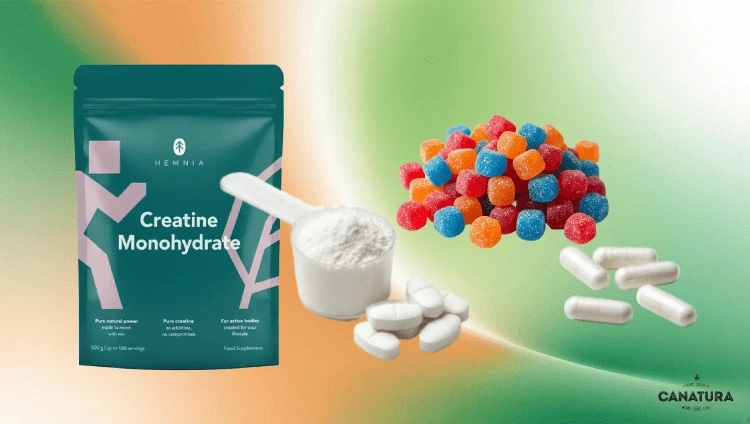
The most popular supplements include:
- Creatine powder: A traditional supplement, offering flexibility in dosage and consumption, low price.
- Creatine tablets and capsules: Precise dosage, convenient to use, suitable for travel.
- Creatine gummies: Precise dosage, pleasant to use, but expensive.
Dosage
How to take creatine? If you exercise, it is recommended to start with the so-called saturation phase.
The goal of this phase is to saturate the muscles so that they have maximum creatine reserves. This phase should last 5-7 days. During this time, the daily dose should be higher, with 20 g divided into 4-5 doses throughout the day recommended.
Once your muscles are saturated, you just need to maintain the level. If you are concerned about an increased risk of side effects, you can skip the saturation phase and start with the maintenance phase dose. However, it will take several weeks to achieve the maximum effect.
How much creatine should you take per day during the maintenance phase? The recommended daily dose is 3-5 g at any time during the day.
- Before exercise: It can provide more energy for more intense training.
- After training: Most effective, muscles absorb more nutrients, ideally taken with a drink or food containing protein and carbohydrates.
The timing, i.e. when to take creatine, is not as important as consistency. For supplementation to be effective, it is necessary to take the supplement every day, even when you are not exercising, so that your muscles maintain high reserves over the long term.

What can we take away from this?
Creatine is a substance produced naturally by the body and stored in the muscles as phosphocreatine, which acts as a quick source of energy for short, intense physical exertion. It is found in small amounts in the diet, and if you want to increase your intake, the most effective way is to take a synthetic creatine supplement.
Creatine is a proven effective supplement. What are the benefits of creatine? It maximises your strength and performance, which you will appreciate especially if you are actively involved in sports. Studies also suggest that it may contribute to neuroprotection, improved cognitive function, immunity and bone health.
Creatine supplementation is well tolerated without significant side effects. When you start taking creatine, you may experience a slight increase in weight due to water retention in the muscles, and digestive problems may occur at higher doses. No other side effects have been confirmed by research; creatine should not cause hair loss or kidney damage.
Creatine monohydrate is still considered the best form of creatine. It is the purest and most studied form, which is also affordable. Creatine can be taken in powder, tablet, capsule or gummy form.
During the first week of creatine use, it is ideal to set the dosage to the so-called saturation phase — 20 g in 4-5 doses per day so that the muscles quickly reach maximum reserves. In the maintenance phase, the daily dose is 3-5 g. Creatine needs to be taken daily to be effective.
FAQ
1. Do I have to take creatine even on days when I don’t train?
Yes, creatine needs to be taken every day to maintain high levels in the muscles.
2. How long can I take creatine without a break?
Current research shows that creatine is safe for long-term use without a break. You can take it for several years without any concerns.
3. What happens if I stop taking creatine?
When you stop taking creatine, the level of phosphocreatine in your muscles will drop to its original level within 4 to 6 weeks. During exercise, you will likely feel a decrease in performance and tire more quickly.
There may be a slight weight loss due to the loss of water retained in the muscles.
In any case, you will not lose the muscle mass you have gained through more effective training if you continue to exercise.
Sources:
- https://pubmed.ncbi.nlm.nih.gov/14636102/
- https://pubmed.ncbi.nlm.nih.gov/12945830/
- https://pubmed.ncbi.nlm.nih.gov/21448659/
- https://www.researchgate.net/publication/361360033_Creatine_supplementation_enhances_immunological_function_of_neutrophils_by_increasing_cellular_adenosine_triphosphate
- https://www.sciencedirect.com/science/article/pii/S1279770723019541
- https://pubmed.ncbi.nlm.nih.gov/33800439/
- https://pubmed.ncbi.nlm.nih.gov/19741313/
- https://pubmed.ncbi.nlm.nih.gov/40265319/
- https://www.tandfonline.com/doi/full/10.1080/15502783.2025.2502094#abstract
Author: Natálie Kubíčková
Photo: AI
“All information provided on this website, as well as the information provided through this website, is for educational purposes only. None of the information contained herein is intended as a substitute for medical diagnosis and such information is not to be considered medical advice or recommended treatment. This website does not promote, endorse or advocate the legal or illegal use of narcotic drugs or psychotropic substances or the commission of any other illegal activity. Please see our Disclaimer for further information.”

